
Beyond the Field Guide: Reflections from Nain
By: Sarah Hobbs
As a natural scientist stepping into the world of social sciences, the experience can be terrifying and deeply uncomfortable. I was heading to Nain, the northernmost community in Nunatsiavut, with the hope of interviewing community members, without any interviews scheduled and knowing almost no one. My roommate can attest to the fact that, during the week leading up to my departure, I was waking up multiple times each night after nightmares where I would sit down for an interview and suddenly lose the ability to speak or think.
As someone who’s only ever done natural science, embracing uncertainty has been a hard pill to swallow. I’m used to research that follows very defined, step-by-step procedures, like a recipe. You read the methods section. You repeat the methods. Uncertainty is something to be avoided. The process should be clear and repeatable. Before I left, I was searching for this exact, precise recipe so I could have the perfect plan going into the community. Reality check: that recipe doesn’t (and probably will never) exist.
That said, it’s important to emphasize that just because this perfect plan doesn’t exist doesn’t mean you shouldn’t be prepared. There are other ways to get ready. My best advice? Ask as many questions as you can to as many people as you can and really listen to what they have to say and share with you. Talking to people who’ve done interviews, gone into the field, or visited the community you're heading to is some of the best preparation you can do.
I was fortunate to be in a great position before my fieldwork: I flew to Goose Bay a week early to attend the final Sustainable Nunatsiavut Futures (SNF) retreat and conference. I spent that week surrounded by the perfect group of people to take advice from, and I can’t even begin to articulate how valuable that was. I spent most of the week simply sitting, listening to others reflect on their experiences with research, and trying to meet and connect with as many people as possible.

There were a few overarching messages that were repeated to me time and time again before I left, pieces of advice that really stuck. First, if you’re planning to do work with a community, you need to spend time in that community to truly understand the context of your project. Second, simply showing up and listening goes a long way. And third, don’t get too caught up in thinking about the outcome or the results, enjoy the process, because it will teach you a lot.
If you’re a master’s student like me, this might be a bit out of your control, but going to the community with someone else makes a big difference. I was lucky to be traveling with my supervisor and PhD student Dylan Seidler. Dylan had been to Nain before and has been doing research in Nunatsiavut for several years. She brought such a wealth of experience and knowledge, and being around that was incredibly grounding and reassuring for me.

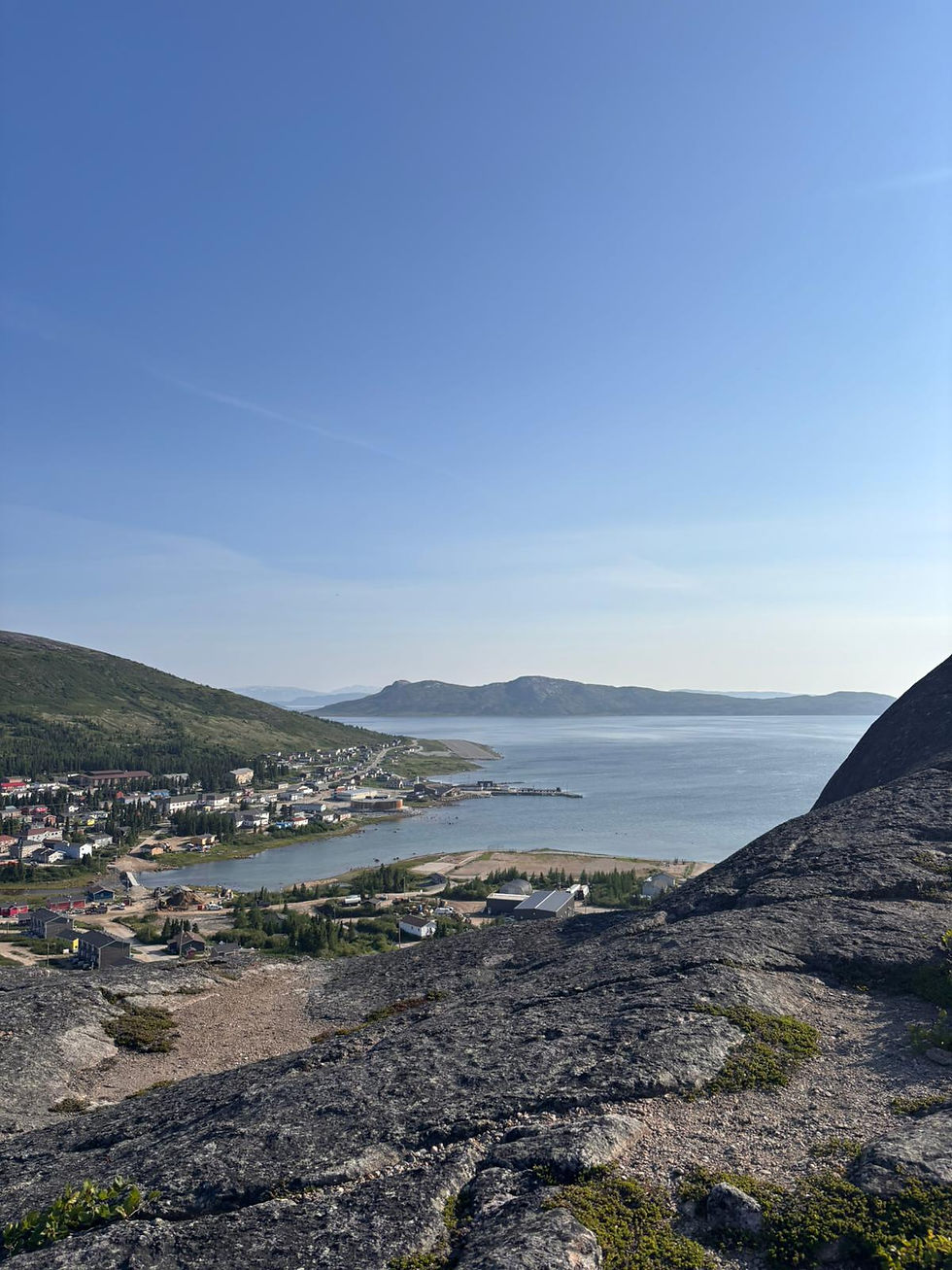
During our first weekend in Nain, Dylan and I planned an open house. Organizing and running an event in a small, unfamiliar community was definitely not a stress-free process. But the only thing worse than being stressed is being stressed alone. So yes, we were both anxious in the lead-up to the event but being able to rely on each other made all the difference. Having someone to bounce ideas off of, share the pressure with, and laugh with when things felt overwhelming was key to making it work.
In Nain, I quickly learned the value of meeting people where they are, both literally and online. Facebook is the community’s main event board, so posting there was essential. We kept the open house casual, running from 9 to 5 so people could drop in, with maps, photos, and reflection boards to keep it interactive and welcoming.
Food played its own role in bringing people together. On the first day, 1 p.m. came and went with no visitors, until Joseph, the Inuit Research Coordinator (IRC) in Nain for SNF, stopped by. He rallied a few people and told us to post our lunch on Facebook. From there, the space filled steadily. By the end of the weekend, about 50 people had come through, leaving us with not only great attendance but meaningful conversations and new relationships.
The next step was actually doing interviews with people, or more accurately, finding people who were willing to do an interview with me. The open house turned out to be an incredibly helpful tool for this. It gave me a chance to meet people, learn a bit about them, and explain what my research was about. It created an opening to invite them to participate. And once one person showed interest, the best way to find others was by building trust with that first person and letting them connect me to more people. In a place like Nain, where everyone knows everyone, making strong connections really matters.
Listen First
It sounds obvious (but it’s not) that one of the most effective ways to build those connections is simply by practicing the art of listening. Give people space to speak, to tell their stories, and to open up about what’s important to them. Even if it feels like what they’re sharing isn’t directly related to your project, I promise that taking the time to learn about people in the community will always benefit both you and your research.
People over Research
Another essential part of building relationships is just showing up as a person, not just as a researcher. Be honest. Be transparent. Be vulnerable. The more of yourself you offer, the more people will offer in return. That’s where the meaningful connection, and real trust comes from. I was honestly amazed at how after just a few conversations, people were not only genuinely curious about what I was doing and why but also so willing to help me.
Being Present
What made just as much of a difference, maybe even more, was simply being present. I really wanted to interview harvesters, especially commercial harvesters, so I figured the best way to do that was to spend time where they spent time. I started hanging around the dock every day. I always brought an activity with me that made me feel more approachable. Most often, I brought my fishing rod and just fished. It’s a lot easier to talk to people about fishing for char when you’re actually fishing for char (and it was fun for me too).


Another thing I noticed was how much people in Nain loved and appreciated art. It’s a shared language, a way of communicating that everyone understands. Luckily, it’s also something I enjoy. I spent a lot of time sketching down by the dock, and that sparked so many conversations. People would come over to see what I was drawing, and before I knew it, we’d be talking about why I was in Nain and what my research was about.
Spend Time
I spent so much time hanging around the dock that I began to see the same people every day, which gave me the chance to actually build real connections. Over time, I could see how people started to open up more, how the familiarity helped build trust. Just beside the dock was the char processing plant, and early on, everyone told me I should try to talk to the man who had managed it for the past 30 years John. Tracking him down took some persistence, I kept showing up, asking if he was around, and waiting. Eventually, one day, he happened to be there at the same time as me. We talked for a while, and after that, he began to see me sitting at the dock regularly. He’d come over and chat with me, and he became incredibly eager to help. Whenever he saw me, he’d tell me when the harvesters were expected to return so I could be there at the right time to speak with them. We got into such a rhythm that eventually, when he saw me walking down the road, he’d pull over and give me a ride so we could head to the dock together. It was relationships like this, built through time, consistency, and genuine presence, that made the entire experience so special and rewarding.
It may seem obvious that if you’re doing work in a community, you should actually go to that community, but it isn’t always a researcher’s priority. After spending time in Nain, my entire outlook on the project shifted. Seeing the place firsthand, meeting people, and forming relationships with those most directly impacted by research completely changed the way I valued my own work. It brought a sense of realness and responsibility that you simply can’t get from reading about a place or its people. And I strongly believe that this connection makes your research better.
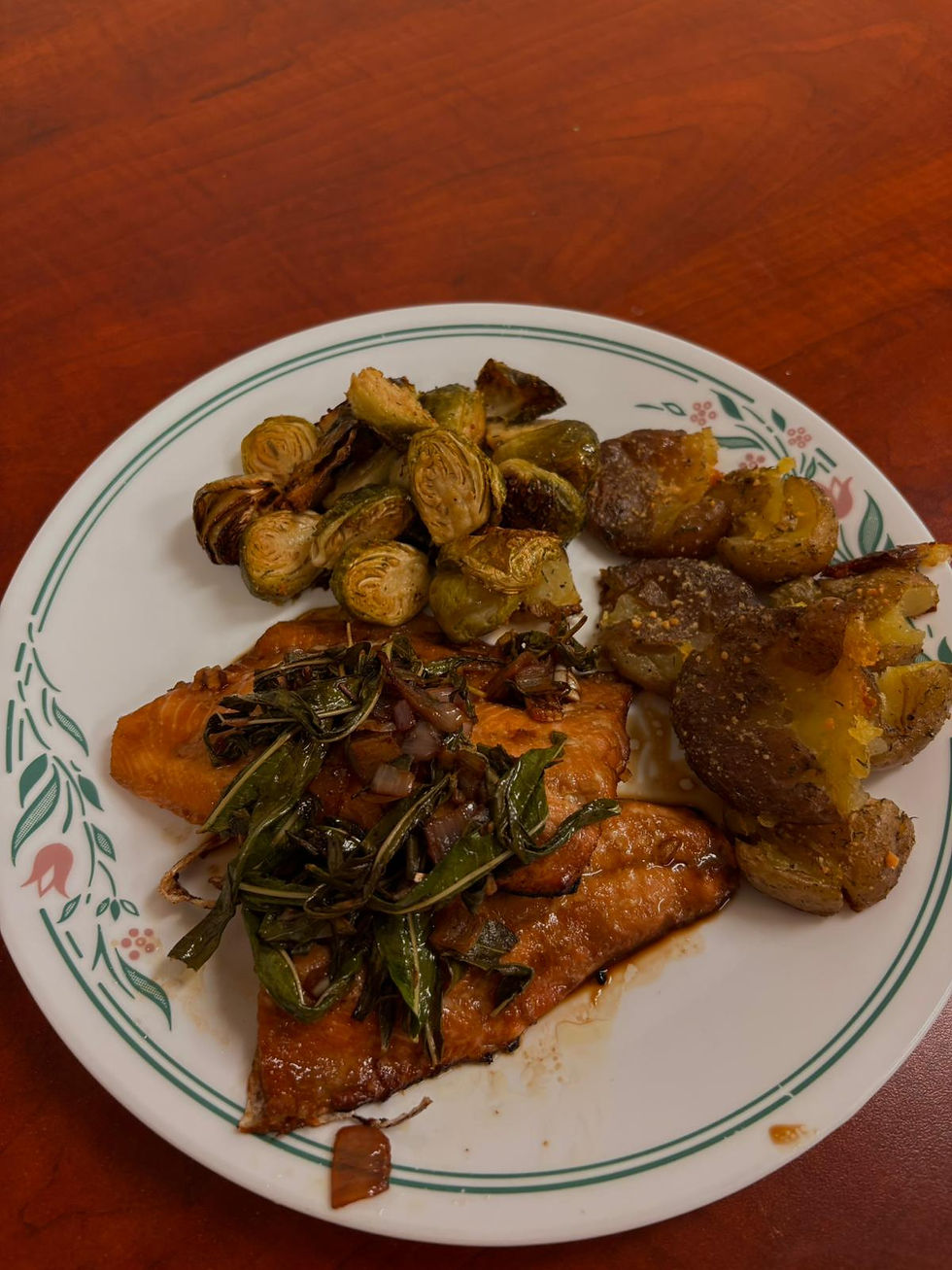
Even outside of the formal interviews and fieldwork, it was often the moments of simply spending time with people that made me feel the most connected to the place and to the project. One evening, Joseph and I crossed to the other side of the bay to go char fishing, determined that I’d finally catch my first char. We spent a couple of hours in one of the most beautiful places I’ve ever seen, chatting with others and just enjoying being outside by the water. Joseph pulled up a sea urchin, and I tried itik (sea urchin) for the first time. Eventually, I caught my first char, and Joseph walked me through gutting and filleting it right there on the rocks, just minutes after we pulled it from the water, and I took it home to cook.


Share Food
Sharing food and cooking for others is something I’ve always loved. There’s something about the way food brings people together that means a lot to me. As someone who finds joy in preparing meals for others, being able to cook the char I had caught for Joseph, someone who had already shared so much of his cooking and kindness with me, was incredibly meaningful. In Nain, food sharing is a huge part of the culture, so getting to participate in that tradition in such a personal way felt really special.
The whole experience, catching, gutting, cooking, and sharing that fish, gave me a deeper level of respect for both the species and the practices that mean so much to community members here. I had spent so much time talking to people about what fishing and char meant to them, but getting to experience it firsthand brought a new layer of understanding that I could never have reached through interviews alone.


It’s a Process
“Focus on the process, not the results” became something I was constantly repeating to myself during my time in Nain. There were plenty of moments when I felt stressed and anxious. There were things I had hoped to accomplish that didn’t happen. More than anything, I wanted to interview some of the commercial harvesters. But that meant choking down my own pride (and turning off the part of my brain that cares how I’m being perceived) and walking up to people who sometimes didn’t want to talk to me or agree to an interview.
Still, I kept showing up. And often, just being present, being seen repeatedly, helped people feel more comfortable with me. The awkward, uncomfortable moments, which realistically, are just a part of this kind of work, were outweighed by the good ones.
Maybe I didn’t get to interview any commercial harvesters, but I did get to spend hours fishing on the dock with a bunch of kids. Kids who, honestly, were much better fishers than I was, and who were kind enough to teach me. I got to observe a whole new generation who valued fishing just as much as the people I was interviewing.

I got to try isigitsiak (smoked char) and iKalujak (dried char) gifted to me by my first interview participant, who wanted me to taste their homemade char and felt it was important that I experience the traditional ways it's prepared. I got to meet friends like Chaim and her daughter, who took me to their favourite swimming spot, and we bonded over our shared love for music and the water. I met John, someone I likely never would’ve crossed paths with in my regular life, who was kind enough to want to help me after knowing me for only a few hours. I met Joseph, who shared my love of cooking, plants, and art, and who made a place from home feel incredibly safe and comfortable.

There were so many people and interactions that went beyond just being “valuable to my research.” They were important and meaningful to me as a person. That’s the part of this experience that will stay with me the longest.
Sometimes it can be difficult to honestly reflect on both the good and the challenging parts of research. To be open about how nerve-racking it can be, and to admit that maybe you won’t accomplish everything you set out to do. I had such a special and amazing experience, but it’s also made me question what the end result of my project will be. And that’s okay, because again, it’s just part of the process.
I truly believe it would be valuable for more researchers to document these realities, especially early-career researchers, so they can better understand the ups and downs that come with this kind of work.


Comments